Northern Circuit Route – Uhuru Peak – Mweka Route

Mt. Kilimanjaro · Tanzania

Northern Circuit Route – Uhuru Peak – Mweka Route

9 Days Highest Success Rate Route

The Northern Circuit Route is the longest standard route on Mount Kilimanjaro and offers one of the mountain’s most comprehensive trekking experiences. The route begins on the western side of Kilimanjaro before crossing the Shira Plateau and continuing around the quiet northern slopes. With more time spent on the mountain, the route provides an excellent opportunity for gradual acclimatization. It also offers a quieter experience away from the busier southern trails, with spectacular views of Kilimanjaro from different sides. The route eventually joins the eastern side of the mountain before approaching the summit through School Hut. After reaching Uhuru Peak at 5,895 metres, the descent follows the Mweka Route through the southern slopes.

No rating yetcommunity reviews

The Expedition

9 days on the mountain.

A closer look at each stage of the journey.

01

Day

Moshi/Arusha to Londorossi Gate to Mti Mkubwa Camp

900m - 2,250m - 2,850m

Rainforest

~2 hour drive + 6km hiking

3-4 hours hiking

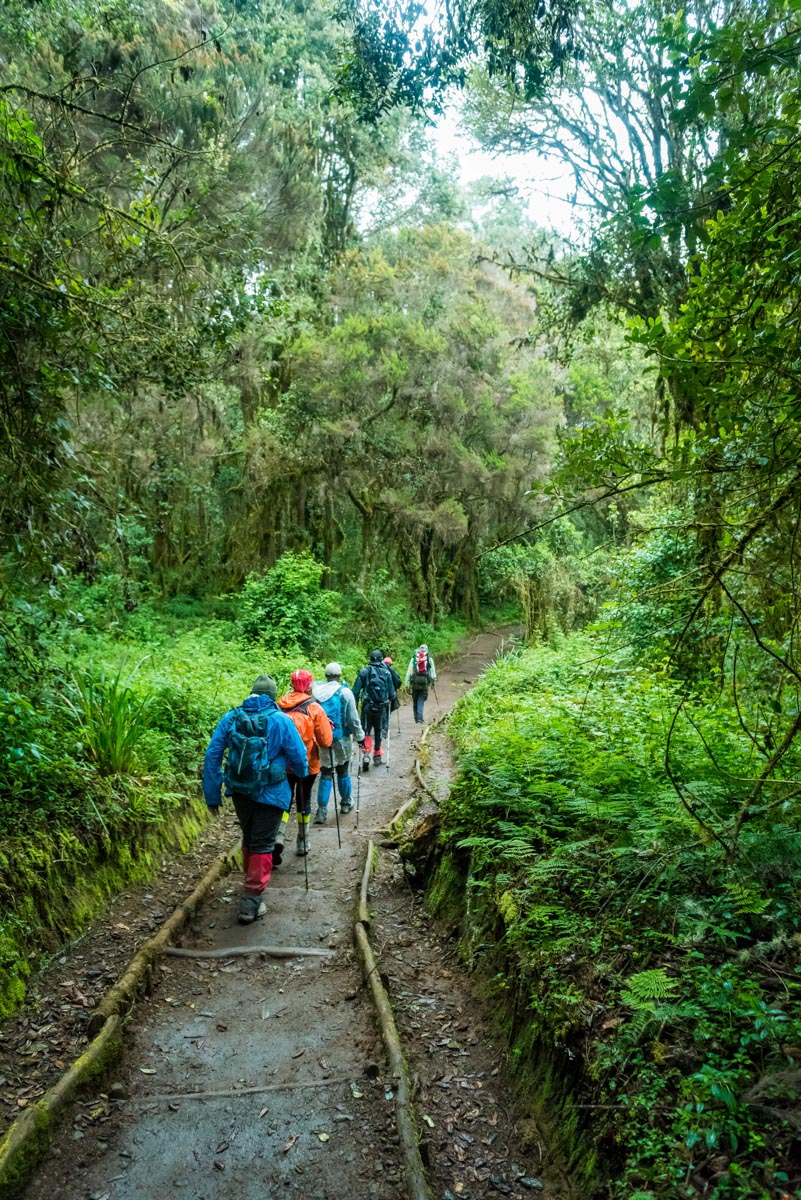
After breakfast at your hotel, you will meet your guide for a final equipment and gear check before beginning the drive west toward Londorossi Gate at approximately 2,250 metres. After completing registration and park entry procedures, the trek begins through the dense montane rainforest. The trail climbs gradually beneath tall trees and lush vegetation, with the possibility of seeing colobus monkeys and other forest wildlife along the way. You will continue toward Mti Mkubwa Camp at approximately 2,850 metres, where you will have dinner and settle in for your first night on the mountain.

02

Day

Mti Mkubwa to Shira 1 Camp

2,850m - 3,610m

Moorland

8km

5-6 hours

After breakfast, you leave the rainforest behind as the trail climbs toward the vast Shira Plateau. The vegetation gradually changes to open heather and moorland, creating wide views across the western side of Kilimanjaro. As you gain elevation, Kibo’s snow-capped summit becomes increasingly prominent. You will continue to Shira 1 Camp at approximately 3,610 metres, where you will have time to rest and enjoy the open mountain landscape before dinner.

03

Day

Shira 1 to Shira 2 Camp

3,610m - 3,850m

Moorland

7km

4-5 hours

Today’s trek is deliberately paced to allow your body additional time to adjust to the altitude. You continue across the broad and open Shira Plateau, with the trail gradually gaining elevation toward Shira 2 Camp at approximately 3,850 metres. The relatively gentle terrain provides an opportunity to enjoy the surrounding volcanic landscape while continuing the acclimatization process. Upon arrival at camp, you will have time to rest. Depending on weather conditions, your guide may recommend a short acclimatization walk before returning to camp for dinner and an overnight rest.

04

Day

Shira 2 to Moir Hut

3,850m - 4,200m

Alpine desert

14km

5-7 hours

After breakfast, you leave the main Shira trail and begin heading north around the western and northern slopes of Kibo. As you move farther from the main routes, the landscape becomes increasingly remote and volcanic, with fewer trekkers along the trail. The route continues through the alpine desert zone toward Moir Hut at approximately 4,200 metres. The day’s gradual altitude gain provides another opportunity for acclimatization while you experience the quieter northern side of Kilimanjaro. After arriving at Moir Hut, you will have time to rest and enjoy dinner in the remote mountain environment.

05

Day

Moir Hut to Buffalo Camp

4,200m - 4,020m

Alpine desert

12km

5-7 hours

After breakfast, you continue the circumnavigation of Kilimanjaro along the remote northern slopes. The trail traverses the high-altitude landscape beneath the northern side of Kibo, with dramatic views across the mountain and the surrounding landscapes. Although you remain at high altitude, the day’s route has a gentle net descent, giving your body further opportunity to adapt before the summit approach. You will arrive at Buffalo Camp at approximately 4,020 metres, where you will have dinner and rest.

06

Day

Buffalo Camp to Third Cave

4,020m - 3,870m

Alpine desert

8km

5-6 hours

After breakfast, you continue along the northern circuit beneath the slopes of Kibo. The trail gradually descends through the alpine desert, providing another relatively gentle day that supports the ongoing acclimatization process. You will continue toward Third Cave Camp at approximately 3,870 metres. Upon arrival, you will have time to rest and recover while preparing for the final approach toward the summit camp. Dinner will be served at camp before an overnight rest.

07

Day

Third Cave to School Hut

3,870m - 4,750m

Alpine desert

5km

4-5 hours

After breakfast, you begin the relatively short ascent toward School Hut at approximately 4,750 metres. The trail continues through the high alpine desert as you approach the eastern side of Kibo. Because the summit attempt begins around midnight, the day is deliberately kept short to allow plenty of time for rest. Upon arrival at School Hut, you will have lunch before resting and preparing your summit equipment. Your guide will conduct a final summit briefing and equipment check, ensuring you are ready for the overnight ascent. An early dinner will be served before you rest for several hours in preparation for the summit climb.

08

Day

School Hut to Uhuru Peak to Mweka Camp

4,750m - 5,895m - 3,100m

Arctic to rainforest

16km total

12-16 hours

You will wake around midnight and begin the final ascent toward Uhuru Peak, the highest point of Mount Kilimanjaro and the highest point in Africa. The climb begins in darkness as you ascend slowly over volcanic scree toward the crater rim. Your guide will maintain a steady pace to help conserve energy and manage the effects of altitude. As dawn approaches, you will continue toward Uhuru Peak at 5,895 metres. UHURU PEAK – 5,895 M After reaching the summit, you will have time to celebrate your achievement and take photographs before beginning the long descent. The route descends toward the lower slopes before continuing through the changing ecological zones toward Mweka Camp at approximately 3,100 metres. The descent from the summit is long, but the lower elevation provides welcome relief after the high-altitude climb. Upon arriving at Mweka Camp, you will have dinner and a well-earned rest.

09

Day

Mweka Camp to Mweka Gate to Moshi/Arusha

3,100m - 1,640m - 900m

Rainforest

10km hike + drive

3-4 hours hiking

After breakfast, you begin the final descent through the lush montane rainforest toward Mweka Gate. The trail gradually descends through the forest, bringing you back into warmer and denser vegetation. Upon reaching Mweka Gate, you will complete the park exit procedures and receive your Kilimanjaro summit certificate. You will then meet your vehicle for the transfer back to Moshi or Arusha, where you can check into your hotel, enjoy a hot shower and relax after completing your Kilimanjaro adventure.

The Details

Before you
head into the mountain.

01

Included

  • All transfers between Moshi/Arusha and the mountain
  • Transportation to/from trailhead
  • Full board during the trek
  • Boiled water, tea, coffee
  • Mountain tents and camping equipment
  • Sleeping mat
  • Support team (certified guides, porters, cooks)
  • Experienced English-speaking guide
  • All park fees and permits
  • Rescue fees
02

Not Included

  • Airfare to/from Tanzania
  • Visa fees
  • Tips for support team (recommended $250-300)
  • Sleeping bags and personal gear
  • Rental gear
  • Meals at hotel
  • Single-occupancy fee
  • Drinks and snacks
  • Personal insurance
  • Altitude medication
03

Gear List

Pack for changing weather, cold mornings and long days on uneven mountain terrain.

Pack light.
Pack well.

Clothing

  • Moisture-wicking base layers
  • Fleece or warm mid-layer
  • Insulated jacket
  • Waterproof / windproof jacket
  • Trekking trousers
  • Warm hat and gloves
  • Warm socks

Footwear

  • Broken-in hiking boots
  • Camp shoes or lightweight trainers
  • Gaiters

Mountain Essentials

  • Headlamp with spare batteries
  • Water bottles or hydration system
  • Trekking poles
  • Sunglasses
  • Sun protection
  • Personal first-aid items

Personal

  • Daypack
  • Duffel / expedition bag
  • Toiletries
  • Personal medication
  • Reusable water bottle
  • Small dry bags